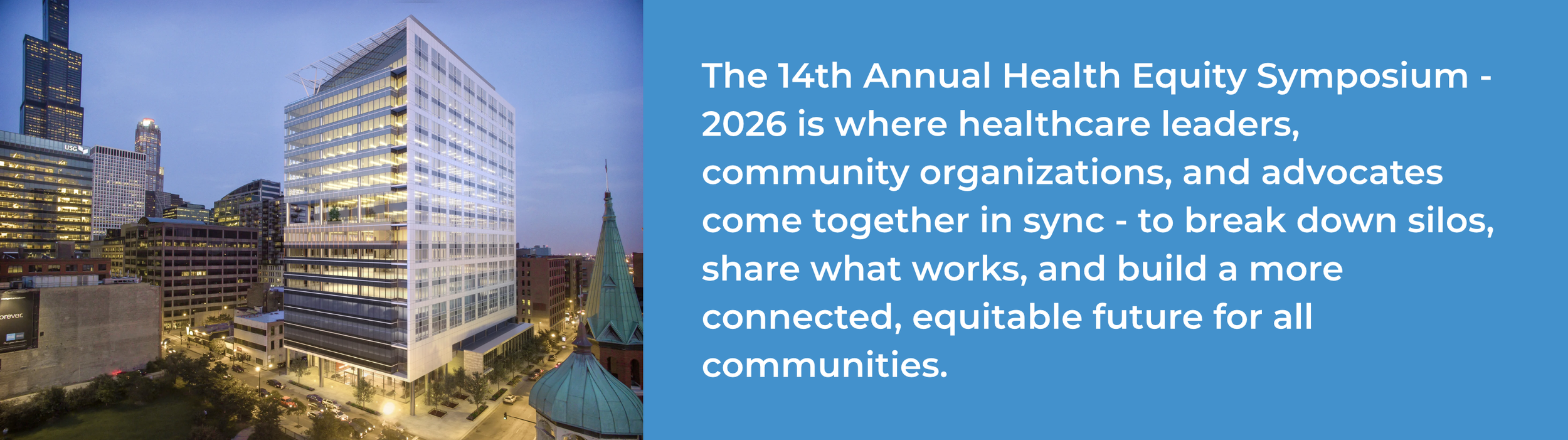

14th Annual Health Equity Symposium - 2026
“BUILDING COMMUNITIES OF RESOURCES”

About the symposium
The Center for Healthcare Innovation’s 14th Annual Health Equity & Innovation Symposium brings together healthcare executives, researchers, clinicians, community leaders, advocates, and emerging professionals for two days of conversations focused on advancing health equity and strengthening the future of healthcare.
Hosted at the Obama Presidential Center in Chicago, this year’s symposium moves from examining today’s most pressing health challenges to exploring the people, partnerships, and career pathways that will shape what comes next.
Day One: Health Equity in Action
Day One focuses on the issues, innovations, and partnerships influencing health outcomes today. Through executive conversations, expert panels, and community perspectives, attendees will explore topics including brain health and Alzheimer’s disease, oncology, HIV and STIs, emerging diagnostics, community engagement, trust in healthcare, access to care, and person-centered approaches to health equity. The day will highlight both emerging science and the practical work happening in communities to close persistent gaps in health outcomes.
Day Two: Building the Future of Healthcare
Day Two broadens the conversation to the people and pathways shaping healthcare’s future. The program will explore careers across healthcare, research, industry, public policy, community health, and related fields while creating opportunities for students, emerging professionals, and established leaders to learn from one another. Conversations will examine how different roles contribute to better health outcomes and how we can build a more diverse, innovative, and community-connected healthcare workforce.
Across both days, the symposium is designed to move beyond simply identifying disparities and toward sharing ideas, building relationships, and identifying opportunities for meaningful action.
VIEW PREVIOUS Symposia
MEET OUR SPONSORS

Understanding Our Current Audience & Expanding Reach
Our Annual Summit attracts a strong base of healthcare industry professionals, with particularly high participation from leadership, corporate, and advocacy sectors. Attendees currently represent a wide range of roles across healthcare organizations, pharmaceutical companies, and patient engagement teams, including:
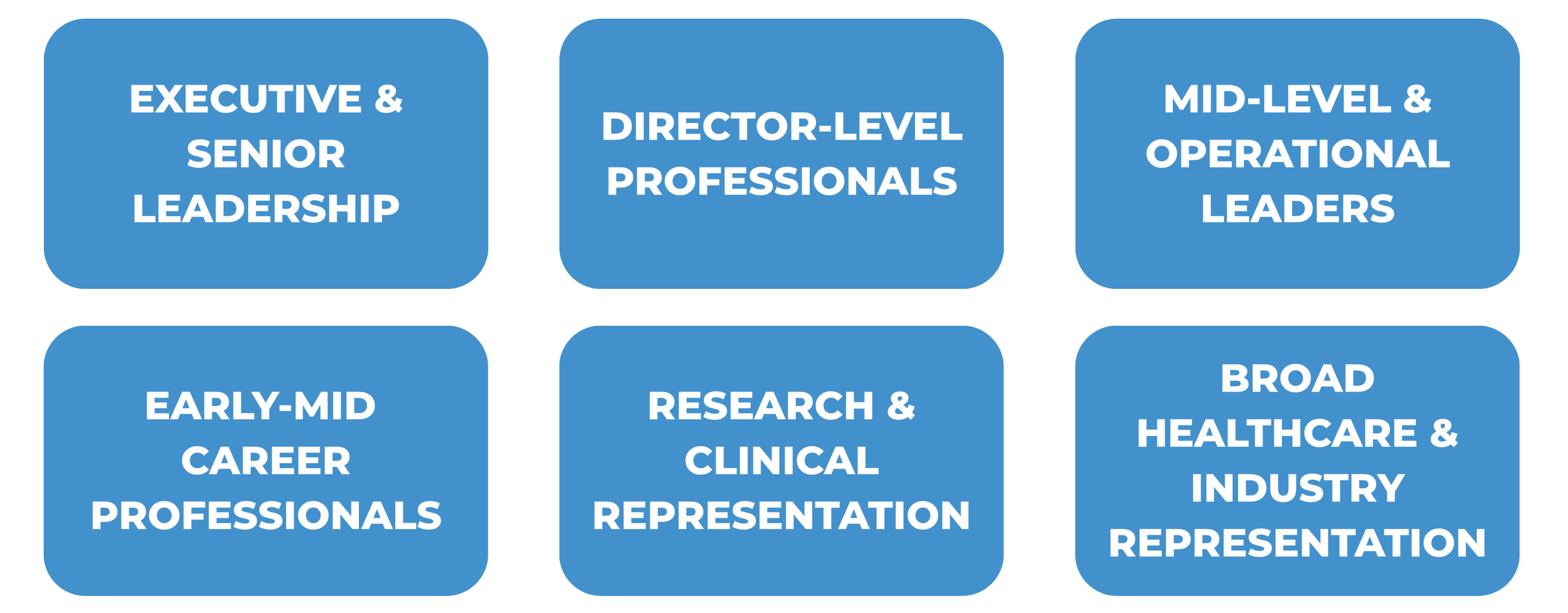
Expanding Our Audience
To further strengthen the Summit’s impact and ensure a more comprehensive representation of the healthcare ecosystem, we aim to expand participation among direct-care providers, frontline clinicians, and community-based professionals, particularly those working in underserved and rural settings.
We are actively seeking to engage:
Physicians (MDs, DOs), Nurse Practitioners, and Physician Assistants
Registered Nurses and Clinical Care Teams
Pharmacists
Social Workers and Case Managers
Mental Health and Substance Use Professionals
Community Health Workers and Patient Navigators
Public Health and Health Department Professionals
Academic Researchers and Clinical Investigators
Medical and Health Professions Students

2026 Health Equity Symposium Goals
Strengthen cross-sector collaboration by equipping healthcare, public health, and community-based leaders with the tools to work in sync across disease states, systems, and industries.
Expand and diversify engagement among clinical providers, community organizations, and healthcare stakeholders who assess, counsel, treat, and connect individuals to comprehensive, whole-person care.
Bridge gaps between community and system-level stakeholders by elevating the Center for Healthcare Innovation’s Community Circles model—supporting organizations working within specific disease states while fostering shared learning, alignment, and collective impact.
Create pathways for inclusion and representation by building a stronger pipeline of leaders from historically underrepresented communities, including those from the global majority and rural settings.
Advance integrated, whole-person care strategies by connecting insights across disease areas and encouraging coordinated responses that reflect the real, lived experiences of communities.
Shift from siloed approaches to systems thinking by highlighting how collaboration across sectors can strengthen health outcomes, improve organizational sustainability, and accelerate impact.
Address upstream drivers of health inequities by supporting leaders in identifying and responding to the structural, social, and political factors that shape health outcomes across communities.
Working In Sync: A Connected Approach to Health Equity
The 2026 Health Equity Symposium centers on a simple but powerful idea: we go further when we move in sync.
Health challenges do not exist in isolation—and neither should our solutions. Across disease states, sectors, and communities, there is a growing need to move beyond fragmented approaches and toward intentional alignment, shared learning, and coordinated action.
Through the Center for Healthcare Innovation’s Community Circles model, this Symposium highlights what it means to:
Work directly with community-based organizations rooted in specific disease areas
Bridge connections between clinical, public health, and community systems
Share best practices, lived experiences, and proven strategies across networks
Strengthen both organizational stability and collective impact
Rather than operating in silos, Community Circles create space for organizations to learn from one another, align priorities, and amplify what works—resulting in more responsive, sustainable, and equitable health solutions.


An Integrated Approach to Health Equity
Health equity requires us to recognize that multiple factors—medical, social, economic, and structural—intersect to shape outcomes. No single issue exists on its own, and no single sector can solve these challenges alone.
The Health Equity Symposium brings together leaders from across the ecosystem to explore how aligned, cross-sector strategies can:
Improve care delivery and access
Strengthen community trust and engagement
Support whole-person health and wellbeing
Drive long-term, systemic change
This is more than a convening—it is a call to align, collaborate, and act together.